Blog
Best Suit Colors for Men: A Practical Guide

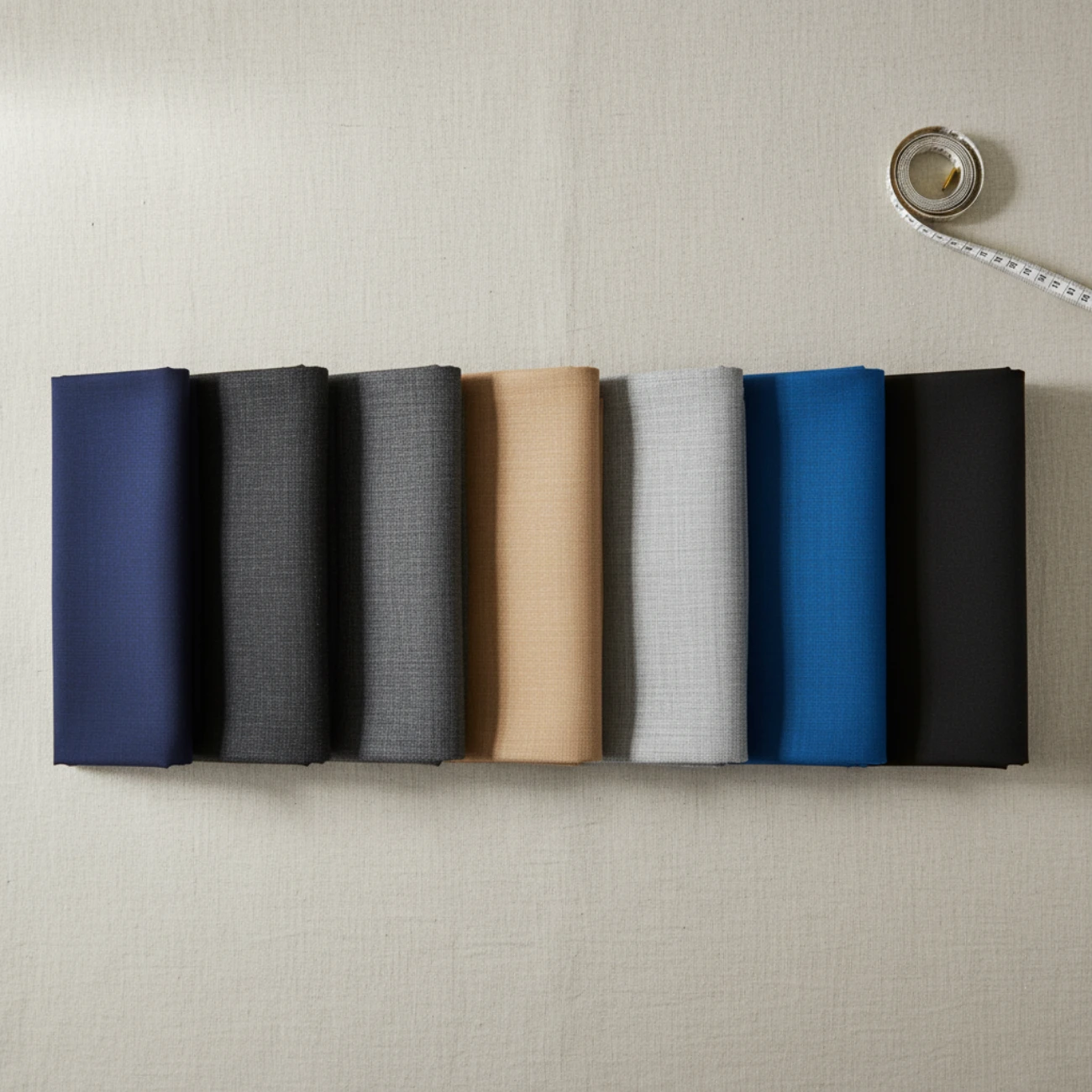
Choosing the best suit colors for men is really about versatility: which shades earn their place by working across the most situations. A striking colour you wear twice a year is a worse buy than a quiet navy you reach for weekly. This guide ranks the seven colours worth owning, explains what each is good for, and tells you which to commission first when you are building a wardrobe from scratch.
Table of Contents
How to think about colour
Before the list, one principle: buy in order of versatility. Your first suits should be the ones that go everywhere, and only later should you add colours for specific occasions or seasons. Darker, cooler shades are the most flexible; lighter and warmer ones are more situational but bring welcome variety once the basics are covered. Get the order right and every suit gets worn.
The 7 best suit colors for men
Ranked roughly by how often you will actually reach for them.
1. Navy
The single most useful suit colour there is. Navy flatters nearly every skin tone, works for business, weddings and interviews, and photographs cleanly. If you buy one suit, buy navy. If you buy five, one of them is still navy.
2. Charcoal grey
The most formal of the everyday colours and the natural partner to navy. Charcoal is authoritative and serious, ideal for business and sombre occasions, and it hides wear well. It is the obvious second suit.
3. Mid-grey
A lighter, friendlier grey that reads slightly less formal and works beautifully for daytime events and the office. It offers useful contrast to navy and charcoal without straying into bold territory, making it a strong third purchase.
4. Light grey
Fresh and summery, light grey comes into its own for daytime weddings, warm-weather events and a more relaxed register. It is more situational than mid-grey but adds real range to a wardrobe that already has the darker basics.
5. Tan and stone
Warm neutrals like tan, sand and stone are the go-to for summer, travel and smart-casual settings. They pair naturally with lighter cloths and relaxed styling, and they photograph well in bright, outdoor light.
6. Blue (mid and bright)
A brighter blue than navy adds personality while staying wearable. It is a confident choice for social occasions and modern business settings, and it stands out gently in a room full of navy and grey.
7. Black (and when to skip it)
Black is the most misunderstood suit colour. It is superb for black-tie and formal evening events but surprisingly limiting for daytime business, where it can look severe or funereal. Own one only after the greys and navy, and reserve it for the occasions that truly call for it.
Matching colour to occasion and skin tone
Beyond versatility, two factors fine-tune the choice. Occasion first: business leans navy and charcoal, daytime and summer events open up to greys and tans, and formal evenings call for black or midnight. Skin tone second: cooler, darker shades flatter most complexions safely, while warmer neutrals suit those who carry lighter or warmer colours well. A little contrast between suit, shirt and skin keeps the look sharp; the basic logic of complementary and analogous shades is covered in this primer on color theory on Wikipedia.
Beyond solids: patterns and textures
The best suit colors for men are the versatile solids, but once those are covered, pattern and texture add depth to a wardrobe without abandoning the core palette.
Pinstripe
A navy or charcoal pinstripe reads as formal and businesslike, a natural fit for boardrooms. Keep the stripe subtle and the base colour dark, and it behaves like an upgraded version of your everyday suit.
Check and windowpane
Checks bring personality and work well in greys and browns for less formal settings. A faint windowpane over a grey base is an easy first step into pattern, while bolder checks are statement pieces for the confident dresser.
Texture
Even in a plain colour, cloth like hopsack, flannel or a subtle herringbone adds interest up close while still reading as a solid from across the room. Texture is the most wearable way to make a familiar colour feel new.
How pattern fits the plan
Treat patterns and textures as additions, not replacements. Build the solid navy, charcoal and grey base first, then layer in a pinstripe or a textured cloth as a fourth or fifth suit, where it adds variety rather than filling a gap.
Which colour to commission first
For a first bespoke suit, navy is the answer almost every time, followed by charcoal, then a mid-grey. That trio covers the overwhelming majority of what most men need, and each one is a workhorse from day one. Add lighter and warmer colours as your wardrobe grows; our guide to how many suits a man should own maps out the full sequence.
Colour is only half the decision, of course. Pair it with the right cut using our guide to single breasted vs double breasted, and for the most photographed suit of all, see the colour advice in our wedding suit playbook and the fabric side in Italian vs English suit fabric. When you are ready, commission any colour on our bespoke suits page or browse the shop, hand-canvassed and made to measure from $250.
Best suit colours by occasion
Choosing among the best suit colors for men gets easier when you start from the occasion.
Business
Navy and charcoal lead, with mid-grey close behind. They look authoritative without drawing attention and pair with almost any shirt and tie.
Weddings
Navy suits almost any wedding. For daytime and summer celebrations, mid or light grey and tan feel fresh, while charcoal suits formal evening events. Avoid upstaging the groom.
Interviews
Navy or charcoal, kept simple, so the focus stays on you rather than the suit.
Evening and formal
This is where darker tones and black earn their place, ideally in a smooth, slightly lustrous cloth for events after dark.
Matching shirts, ties and shoes to each colour
A suit colour is only as good as what you pair with it. Navy is the most flexible, taking white, blue, pink and patterned shirts, and both black and brown shoes. Charcoal and grey are similarly accommodating, pairing with black shoes for formal looks or brown for daytime. Tan and lighter suits call for brown or tan shoes and softer shirt colours. As a rule, let the suit be the anchor and keep shirt, tie and shoes in harmony rather than in competition.
Seasonal colour choices
Colour and season interact. Darker, cooler shades like navy and charcoal work all year and dominate cooler months. Lighter greys, tans and blues come into their own in spring and summer and in warm climates, where they feel appropriate and reflect heat. A wardrobe that spans both keeps you looking right whatever the weather is doing.
Suit colours to approach with caution
A few colours are worth owning only once the versatile core is in place, or worth skipping for most men.
Black
Best reserved for formal evening events and black tie. For daytime business it can look severe and is far less useful than navy or charcoal.
Brown
A mid or light brown suit can look excellent in the right setting, but it is less formal and less flexible, so it belongs later in a wardrobe.
Bold and fashion colours
Burgundy, bottle green and strong checks make a statement but wear thin quickly if they are all you have. Treat them as accents to a solid base.
Very light suits
Cream and pale tones are lovely for summer and weddings but stain easily and suit a narrow set of occasions, so buy them once the everyday colours are covered.
A simple order to build your colours
If you want a clear plan, buy in this order: navy, charcoal, mid-grey, then a second navy or a subtle pattern, then a lighter or seasonal colour. Following that sequence means every suit you add is immediately useful, and you never end up with a wardrobe full of colours you rarely reach for.
Frequently asked questions
What is the best colour for a first suit?
Navy. It is the most versatile suit colour, works across business, weddings and interviews, and suits nearly every complexion.
Is a black suit a good everyday choice?
Not really. Black is excellent for formal evening events but can look too severe for daytime business. Navy and charcoal are far more useful for everyday wear.
What colour suit is best for a wedding guest?
Navy or mid-grey for most weddings, with light grey or tan for daytime and summer celebrations. Avoid black unless the invitation specifies formal evening dress.
What is the most versatile suit colour?
Navy. It works for business, weddings, interviews and evening events, flatters nearly every skin tone and photographs cleanly, which is why it is the standard first suit.
Can you wear a grey suit to a wedding?
Yes. Mid-grey and light grey are excellent wedding-guest choices, especially for daytime and summer celebrations. Save charcoal for more formal weddings and avoid black unless the dress code is formal evening.
What suit colour is best for a job interview?
Navy or charcoal. Both look serious and professional without drawing attention, letting the focus stay on you rather than the suit.
What is the best all-round suit colour?
Navy. It works across business, weddings, interviews and evening events, flatters almost every complexion, and pairs with the widest range of shirts and shoes.
What shoe colour goes with a navy suit?
Both black and brown work with navy, which is part of what makes it so versatile. Black reads more formal, brown more relaxed and daytime.
Is a black suit worth owning?
Only after navy, charcoal and grey. Black is excellent for formal evening events and black tie but too severe for most daytime business, so it earns a place late in a wardrobe.