Blog
Italian vs English Suit Fabric: Which Is Right for You

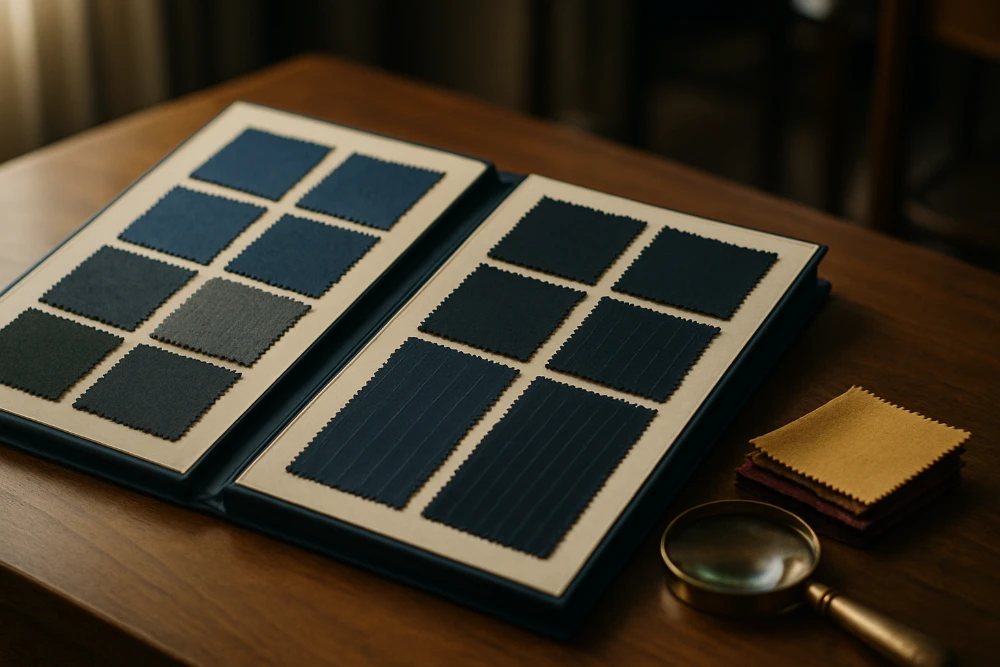
Italian vs english suit fabric is the most common decision a bespoke client makes, and the one most likely to be made based on brand names rather than actual characteristics. Understanding what each tradition produces (and what Thai silk contributes to the mix) lets you choose fabric based on how it will actually wear, drape, and photograph. Once you understand the character of each tradition, comparing swatches becomes much simpler.
At Bespoke Suits Bangkok, we stock over 500 fabric options across Italian mills, English mills, and premium Thai silks. Here is how they compare, and how to pick the right one for your suit.
Italian vs English Suit Fabric: Character and Feel
The core difference between Italian and English wool traditions comes down to fiber selection, weave, and finishing. Italian mills tend to produce softer, drapier cloths with a more relaxed hand. English mills produce structured, harder-wearing worsteds with a crisper appearance. Neither is objectively better. They suit different styles, climates, and use cases.
Italian Mills: Loro Piana, Vitale Barberis Canonico, Cerruti, Scabal
Italian wool tends to be spun from finer merino fibers, often at higher super numbers (Super 130s and above). The finishing process is gentler, preserving softness. The resulting cloth drapes beautifully, follows the body’s shape, and photographs with a soft luster.
- Loro Piana: Considered the pinnacle of Italian luxury cloth. Known for cashmere blends and superfine wools. Signature softness, exceptional hand
- Vitale Barberis Canonico: Broader range from workhorse tropical wools to Super 180s. Excellent value at mid-tier price points
- Cerruti: Fashion-forward patterns, often used by designer houses
- Scabal: Straddles Italian and English traditions with cloth woven in England but finished in the Italian style
English Mills: Holland and Sherry, Dormeuil
English worsted wool is spun tighter, finished more firmly, and often woven at slightly lower super numbers (Super 100s to 120s) for durability. The resulting cloth has more body, holds a crease better, and wears longer. According to the Wikipedia entry on worsted wool, worsted yarn requires long-staple fibers spun through additional processing steps that align the fibers parallel, producing a smoother, more structured cloth than woolen yarn.
- Holland and Sherry: The traditional Savile Row choice. Deep archive of classic patterns (chalk stripes, herringbones, glen checks). Structured, formal, timeless
- Dormeuil: Similar traditional English character, with some innovative fabrics like Vanquish (blends with vicuña and cashmere) at the top end
Thai Silk
Not a wool at all, but worth including because Bespoke Suits Bangkok’s location gives us direct access to premium Thai silk. Silk suits are rare and formal, most appropriate for weddings, evening events, or as a jacket-only piece. Thai silk has a distinctive slub texture that catches light in a way European silks do not.
Which Fabric for Which Climate
Fabric choice should follow the climate you will wear the suit in, not just where you buy it.
- Bangkok, Singapore, Dubai, Miami (hot and humid year-round): Italian tropical wool from VBC or Loro Piana, Super 100s to 120s, weight 270 to 320 grams
- London, New York, Tokyo (four-season): English worsted from Holland and Sherry or Dormeuil, Super 100s to 130s, weight 320 to 360 grams
- Milan, Los Angeles, Sydney (mild): Italian mid-weight from VBC or Loro Piana, Super 120s to 150s, weight 300 to 340 grams
- Cold climates (below 10°C regularly): Heavier flannel or tweed from English mills, or wool-cashmere blends from Loro Piana
Which Fabric for Which Style
Beyond climate, fabric affects how the suit looks and moves.
Italian Cloth for a Softer, Modern Silhouette
If you prefer a lightly-structured jacket with soft shoulders, a slightly shorter length, and a more casual drape, Italian cloth supports that style. It also photographs with a soft luster that flatters skin tones in wedding and business portrait settings. Italian cloth pairs well with Neapolitan-influenced tailoring, which favors minimal shoulder padding and a shirt-shoulder construction.
English Cloth for a Structured, Traditional Silhouette
If you prefer a fully-canvassed jacket with strong shoulders, defined chest, and a classic length, English worsted delivers. The crisper hand also holds a chalk stripe or bold pattern more sharply than Italian cloth. English worsted is the traditional choice for banking, law, diplomatic, and formal business wardrobes.
Super Numbers Explained
Super numbers refer to fiber fineness. Higher is not always better.
- Super 100s to 110s: Workhorse business suits. Durable, holds a press, wears daily
- Super 120s to 130s: Sweet spot for most clients. Softer than 100s, still durable
- Super 150s to 180s: Luxury tier. Softer, drapier, more delicate. Best for occasional wear
- Super 200s and above: Rare, extremely delicate, essentially collectors’ cloth
Fabric Weight and Its Implications
Beyond super number, weight (measured in grams per meter) determines how a suit drapes and how warm it feels.
- 250 to 280 grams: Very lightweight. Only for extreme tropical climates. Delicate
- 280 to 320 grams: Standard tropical wool. Ideal for Bangkok, Singapore, Dubai
- 320 to 360 grams: All-season. Works in most climates including four-season European
- 360 to 400 grams: Winter-weight. Only for cold climates
- Over 400 grams: Heavy flannel or tweed. Cold climates only
For a Bangkok-based wardrobe, keep the weight under 320 grams for anything worn regularly. For a suit destined for a colder climate, go heavier.
Pattern Traditions
Italian and English mills also differ in the patterns they emphasize:
- Italian mills: Solid navys, greys, and browns. Subtle textures like nailhead, birdseye, sharkskin. Modern micro-checks. Fashion-forward color explorations at Cerruti
- English mills: Chalk stripes, pinstripes, glen checks, prince of wales checks, herringbones. Traditional patterns that read as formal and considered
If you want a subtle, modern solid, Italian mills offer more variety. If you want a distinctive traditional pattern (chalk stripe for banking, glen check for country wear), English mills own the tradition.
Cost Implications
Fabric is the single largest driver of Bangkok bespoke suit cost. The base price of a Bespoke Suits Bangkok suit is $250, and moving from entry-tier Italian tropical wool up to Loro Piana Super 150s or Holland and Sherry archive cloth increases the total. Ask for a specific quote based on the fabric you are interested in.
See Fabrics in Person
Photos and descriptions only go so far. Visit our Sukhumvit 28 atelier to touch and drape the fabrics before committing. For international clients, we can post fabric swatches by mail before you fly in.
For a full price breakdown across fabric tiers, read our Bangkok bespoke suit cost guide. For hot-climate fabric specifics, see our tropical wool suit Bangkok guide. And to understand how fabric fits into overall construction quality, read our post on the parts of a bespoke suit.
Book a Fabric Consultation
Contact us via the bespoke suits page or WhatsApp +66 89 453 4780. Bring or send reference photos of styles and colors you like, and we will pre-select 15 to 20 fabric samples for your first appointment.