Blog
Single Breasted vs Double Breasted: Which Suits You

The single breasted vs double breasted choice shapes the entire character of a suit, more than most people realise. It changes the silhouette, the formality and even how tall you look, yet it often gets decided by habit rather than thought. This guide lays out exactly how the two cuts differ, who each one flatters, and when to reach for which, so you can commission the right one with confidence.
Table of Contents
Single breasted vs double breasted, the quick verdict
If you only own one suit, make it single breasted: it is the more versatile, everyday choice that works from the office to a wedding. Add a double breasted once you want a second suit with more presence and personality. That is the short answer. The rest of this guide explains why, so you can decide based on your body, your wardrobe and the occasion rather than a rule of thumb.
What defines each cut
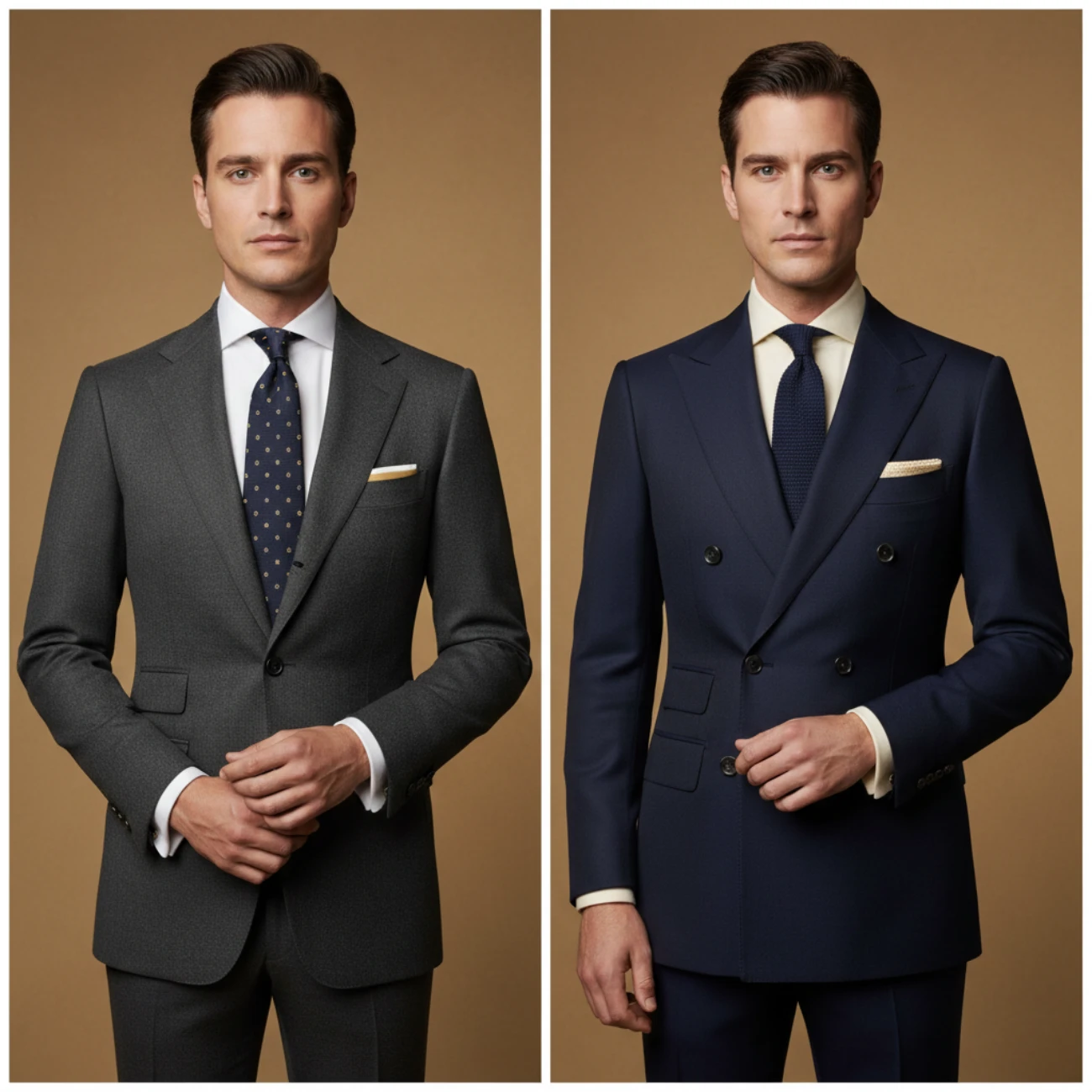
A single breasted jacket has a single column of buttons and a narrow overlap of fabric at the front, usually with one, two or three buttons. It is the default suit shape most men picture. A double breasted jacket has two parallel columns of buttons and a wide overlap of cloth, traditionally with six buttons of which two fasten, and wider peak lapels. That extra layer of fabric across the torso is what gives it its bolder, more structured look.
Single breasted vs double breasted on the body
Here is where the practical differences show up, and why one cut may suit you better than the other.
Silhouette and height
Single breasted jackets create a longer vertical line, which tends to make the wearer look taller and leaner. Double breasted jackets emphasise width across the chest and a strong waist, which adds presence but can visually shorten a very short frame. Taller and average builds carry double breasted especially well.
Formality
Double breasted reads as more formal and more fashion-forward. It has a dressed-up, confident quality that stands out at events. Single breasted is the more neutral register, equally at home in a boardroom or worn with the jacket open and relaxed.
Body type
Single breasted is the safer choice for shorter or fuller builds because it is more forgiving and elongating. Double breasted flatters a taller, leaner or athletic frame that can fill out the extra cloth without being overwhelmed by it. A skilled tailor can adapt either to your shape, but these are the natural leanings.
Versatility
The single breasted jacket wins on versatility because it looks correct buttoned or unbuttoned, and it pairs easily with knitwear and separates. A double breasted jacket should almost always stay buttoned to keep its clean line, which makes it slightly less flexible day to day, and more of a statement piece.
When to wear which
Reach for single breasted for daily business wear, interviews, and any time you want a jacket you can dress up or down. Reach for double breasted for weddings, evening events, and occasions where you want to look deliberately sharp and a little distinctive. For a groom in particular, a double breasted cut photographs with real impact, which is why it features in our wedding suit playbook. You can read more on the history of the style in this overview of the double-breasted cut on Wikipedia.
Lapels, buttons and the details that change the look
The single breasted vs double breasted decision is the big one, but a few smaller details fine-tune how each cut reads.
Lapel style
Double breasted jackets almost always wear peak lapels, which point upward and reinforce their bold, formal character. Single breasted jackets usually take notch lapels for everyday wear, though a peak lapel dresses a single breasted jacket up nicely for evening.
Button stance and count
A single breasted jacket’s button stance sets where the waist appears, and a slightly higher stance lengthens the leg line. The classic double breasted uses a six-on-two layout (six buttons, two fastening), which frames the torso and is the most versatile double breasted configuration.
Vents
Both cuts work with side vents, which flatter most builds and let the jacket move cleanly. Vent choice is independent of breast style, so you can pair it with either.
Where the difference really shows
Unbuttoned, a double breasted jacket loses its shape and hangs open awkwardly, which is why it stays fastened. A single breasted jacket looks intentional either way. That one practical difference is what makes single breasted the flexible everyday option and double breasted the deliberate, dressed-up one.
Which to commission first in Bangkok
For a first bespoke suit, a single breasted navy or charcoal is the workhorse that earns its keep immediately. Once that base is covered, a double breasted becomes a rewarding second commission with maximum style return. Either way, the cut is only as good as the make and the fit behind it: every suit at Bespoke Suits Bangkok is hand-canvassed, cut from a new pattern and finished over three fittings, from $250.
See both cuts realised on our bespoke suits page and check the bespoke suit prices before you plan. To finish the styling decisions, pair this with our guides to the best suit colors for men and the men’s business dress code, and read up on the construction markers in parts of a bespoke suit.
Styling a single breasted suit
Because it is the versatile everyday cut, a single breasted suit dresses up or down with ease.
For business, pair it with a white or light blue shirt and a simple tie. For smart casual, drop the tie, open the collar, or split the jacket off as a blazer over knitwear. A two-button single breasted in navy or grey is the most flexible thing in most wardrobes, covering the widest range of occasions with the least effort.
Styling a double breasted suit
A double breasted suit carries more presence, so let it lead the outfit and keep everything else simple.
Keep it buttoned to hold the clean line, and pair it with a plain shirt and an understated tie so the cut does the talking. Peak lapels and a strong waist already make a statement, so avoid busy patterns that fight them. Double breasted works beautifully in navy for business and in richer tones or textures for evening and events.
Fabric and colour for each cut
Both cuts work in the core suit colours, but some pairings shine. A single breasted suit is the natural home for versatile mid-weight wools in navy, charcoal and grey. A double breasted rewards a little more character: a deeper navy, a textured cloth, or a subtle pattern that suits its dressier nature. In hot climates, both benefit from tropical-weight cloth so the extra fabric of a double breasted stays comfortable.
Common mistakes with each cut
A few errors undercut either style. With single breasted, the usual mistakes are fastening the bottom button (leave it undone) and buying a jacket too short. With double breasted, the classic error is wearing it unbuttoned, which collapses its shape, and choosing a cut too boxy or too tight. In both cases, the shoulders and overall balance matter far more than the number of buttons.
How to choose for your body and lifestyle
The single breasted vs double breasted decision comes down to your build, your wardrobe and how you will wear the suit.
If you are shorter or fuller
Lean single breasted. Its longer vertical line is more elongating and forgiving, and it avoids the bulk that a double breasted’s overlapping cloth can add across the middle.
If you are taller or leaner
You can wear either, and a double breasted especially rewards a taller, leaner frame that fills out the extra fabric and carries the wider lapels with ease.
If this is your only suit
Choose single breasted. It handles the full range of occasions, from the office to a funeral to a wedding, without looking out of place.
If it is your second or third
A double breasted is a rewarding next step that adds real personality once your versatile single breasted base is covered.
Which cut for which occasion
Match the cut to the event and you will rarely go wrong. For daily business and interviews, single breasted is the natural choice. For weddings, evening events and occasions where you want to look deliberately sharp, a double breasted makes an impression. For everything in between, single breasted covers the everyday and double breasted covers the standout moments.
Frequently asked questions
Is single breasted or double breasted more formal?
Double breasted is generally more formal and more of a statement, while single breasted is the versatile everyday standard that suits almost any occasion.
Can short men wear double breasted suits?
Yes, with the right proportions. A tailor can keep the lapels and button placement balanced so the cut does not overwhelm a shorter frame, though single breasted remains the more elongating and forgiving choice.
Should a double breasted jacket stay buttoned?
Yes. A double breasted jacket keeps its clean line when fastened, so keep at least one button done up whenever you are standing.
Are double breasted suits back in style?
Yes. The double breasted cut has returned firmly to modern tailoring and reads as confident and contemporary rather than dated, especially in navy with soft, natural shoulders.
How many buttons should a single breasted suit have?
Two is the versatile classic. One button is slightly more formal and elongating, while three suits taller men. Two buttons flatter the widest range of builds.
Can you wear a double breasted suit to the office?
Absolutely, in navy or grey it works well for business. Keep it buttoned to hold the clean line, and pair it with a simple shirt and tie for a polished, professional look.
Which is more versatile, single or double breasted?
Single breasted, comfortably. It works buttoned or unbuttoned, dresses up or down, and its jacket doubles as a blazer. Double breasted is more of a deliberate statement piece.
Do you button the bottom button on a suit?
On a single breasted jacket, leave the bottom button undone. On a double breasted, keep it fastened to maintain the clean line.