
Blog
How a Suit Should Fit: The Complete Guide

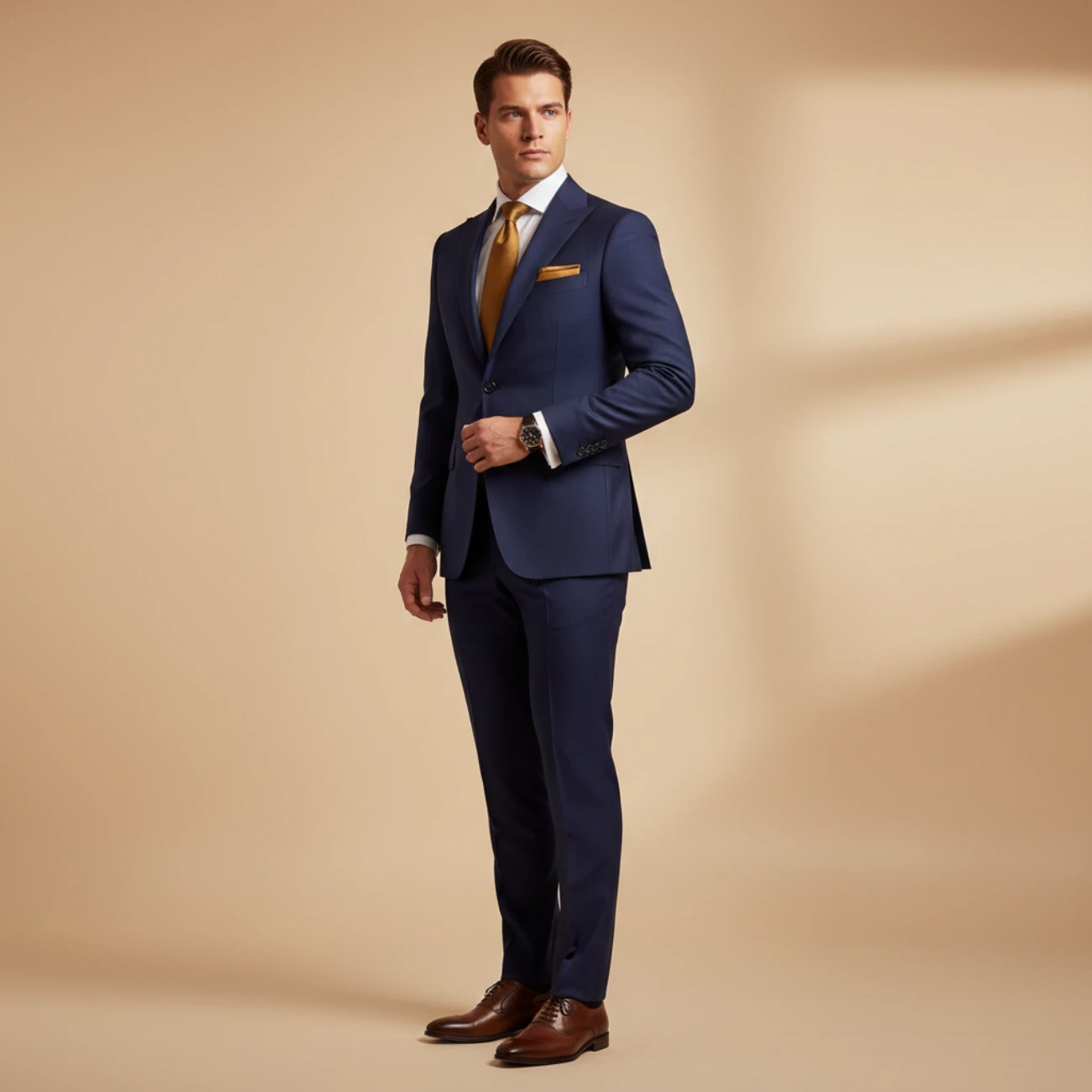
Knowing how a suit should fit is the difference between a jacket that flatters you and one that merely covers you. Cloth and colour get all the attention, but fit is what your eye actually reads across a room, and it is the one thing a cheap suit can never fake. This guide walks through the nine checks a tailor uses, from the shoulders down to the trouser break, so you can judge any suit, on the rack or on your own body, in under a minute.
Table of Contents
How a suit should fit, in one look
Before the detail, train your eye on the overall picture. A well-fitting suit follows the shape of your body with a smooth, clean line and no distress marks. There are no horizontal wrinkles pulling across the back or chest, no vertical folds hanging off the shoulders, and no gap between the collar and your shirt. If the cloth looks calm and the silhouette looks like you, the fit is close. Pulling, bunching and sagging are the three signals that something is wrong.
Start with the shoulders
The shoulder is where fit is won or lost, because it is the hardest part of a jacket to alter after the fact. The shoulder seam should sit right at the edge of your shoulder bone and then fall straight into the sleeve with no bump, no dent and no overhang. If there is a divot or a ripple where the sleeve meets the shoulder, the jacket is the wrong size or the wrong shape for you, and no amount of tailoring at the waist will rescue it. Get the shoulders right first; everything else is negotiable.
How a suit should fit: the 9 checks that matter
Run through these in order. The higher up the list, the harder and more expensive the fault is to fix, so weight your judgement accordingly.
1. The shoulder seam
It should end exactly at the outer edge of your shoulder. Too far out and the jacket looks borrowed; too far in and the sleeve head pulls and wrinkles. This is the single most important check.
2. The chest and the button
With the jacket buttoned, you should be able to slide a flat hand under the lapel comfortably, but not a fist. If the button strains and pulls an X-shaped wrinkle from the fastening point, it is too tight. If the chest billows out with a loose gap, it is too big.
3. Jacket length
A classic jacket ends around the middle of your hand when your arms hang naturally, roughly covering your seat. Too short looks trendy and cold in a few years; too long shortens the legs and ages the look. Aim for the balance point that splits your height evenly.
4. Sleeve length and shirt cuff
The jacket sleeve should end at your wrist bone and let about one to one and a half centimetres of shirt cuff show. That sliver of linen is a quiet mark of a proper fit, and it is an easy alteration to request.
5. The collar hug
The jacket collar should rest flat against your shirt collar all the way around, with no gap and no bunching. A collar that stands away from the neck (“collar gap”) usually points to a posture or balance issue that a skilled tailor corrects at the fitting stage.
6. Waist suppression
A jacket should taper in gently at the waist to trace an athletic line, without pulling. You want shape, not a corset. This is one of the easier things to adjust, so do not panic if a stock jacket is boxy; a good tailor can bring it in.
7. The trouser waist
Trousers should sit at your natural waist and stay there without a belt cinching them into folds. If you need to haul them up or rely on the belt to hold them, the waist is too big. They should feel secure on their own.
8. The trouser break
The “break” is how the trouser hem meets the shoe. A small dimple of cloth (a slight or medium break) is the timeless choice, while no break gives a sharper, more modern line. Pooled fabric around the ankle always reads as too long.
9. Seat and thigh
Trousers should skim the seat and thigh cleanly. Horizontal pull lines under the seat mean too tight; sagging, empty cloth means too loose. This is where a made-to-your-body cut shows its value most clearly.
How a bespoke fit differs from off the rack
An off-the-rack suit fits an average body of your nominal size, then relies on alterations to get closer. That works to a point, but it cannot change the shoulder or the fundamental balance of the jacket. A bespoke suit starts from a pattern drafted for your body alone, including the small asymmetries almost everyone has, one shoulder lower than the other, a fuller chest or a longer arm, so the nine checks above are built in from the first cut rather than chased afterwards.
That is also why fittings matter. At Bespoke Suits Bangkok every suit is hand-canvassed and refined across three fittings, which is the stage where a good fit becomes a precise one. To see how that construction underpins the fit, read our guide to the parts of a bespoke suit, and to understand the difference in approach, see bespoke vs made to measure. You can read more general background on the garment itself in this overview of the suit on Wikipedia.
Common suit fit mistakes to avoid
Once you know how a suit should fit, the same few mistakes become easy to catch before they cost you. These are the ones that turn up most often.
Buying a size too big
Many men size up for comfort, then rely on a belt and roomy cloth to get through the day. The result swamps the frame and reads as borrowed. A jacket should feel close and supportive, not loose.
Chasing an ultra-short jacket
Very short jackets have trended in recent years, but they cut the body in half and date quickly. A jacket that covers the seat and ends around the middle of your hand keeps your proportions balanced and stays correct far longer.
Over-tightening everything
Slim should not mean strained. Buttons that pull an X-shaped wrinkle, trousers that cling and sleeves you cannot move in all signal a suit taken in too far. Aim for a clean line with room to move.
Expecting alterations to fix the shoulders
Waist, hem and sleeve length are all adjustable. The shoulders and the overall balance of a jacket are not, at least not easily or cheaply. That is why the shoulders must fit at purchase, and why a made-to-body cut earns its keep.
Judging fit over the wrong shirt
A jacket is worn over a shirt, so trying one on over a bulky top throws everything off. Always judge fit over the kind of shirt you will actually wear, and let a clean centimetre of cuff show at the wrist.
Getting the fit dialled in in Bangkok
The fastest way to understand how a suit should fit is to be fitted properly once, in person. Our tailors work from Sukhumvit, a short hop from Asok, Phrom Phong and Thonglor, and a fully canvassed two-piece starts from $250, cut to your exact measurements over three fittings and finished in 2 to 3 days.
Browse the results in our tailor gallery, see the full service on the bespoke suits page, and while you are planning your wardrobe, our companion guides on single breasted vs double breasted cuts and the men’s business dress code will help you choose the right style to fit.
How fit changes with jacket style
The rules for how a suit should fit stay constant, but the target silhouette shifts slightly with the style of jacket you choose.
Classic fit
A classic or regular fit leaves a little more room through the chest and waist and sits comfortably over a wider range of builds. It should still follow your shape with a clean line; classic means comfortable, not baggy.
Slim fit
A slim fit is cut closer through the chest, waist and legs for a sharper, more modern outline. The same checks apply, and the danger is going too far: if buttons strain or you cannot sit comfortably, it has crossed from slim into tight.
Relaxed and soft-tailored
Softer, less structured jackets have become popular for their comfort and easy drape. They still need correct shoulders and balance, but they trade a sharp waist for a gentler, more natural line that suits casual settings and warm climates.
How a waistcoat and overcoat should fit
A complete wardrobe is more than the jacket and trousers, and the same principles extend to the other pieces.
A waistcoat should sit close to the body without pulling at the buttons, long enough to cover the waistband so no shirt shows between it and the trousers, with the lowest button traditionally left undone. An overcoat is worn over a jacket, so it needs a little more room through the chest and shoulders to layer cleanly, while still tracing your shape rather than hanging like a box. A classic overcoat ends at or just below the knee.
Frequently asked questions
What is the most important part of suit fit?
The shoulders. The shoulder seam should sit at the edge of your shoulder bone and fall cleanly into the sleeve. It is the hardest area to alter, so it should fit correctly from the start.
Can a tailor fix a suit that is too big?
Often yes, within limits. Taking in the waist, shortening sleeves and adjusting the trouser waist are routine. Reducing the shoulders or chest is difficult and costly, which is why buying close to your size, or bespoke, matters.
How much shirt cuff should show below the jacket?
About one to one and a half centimetres. It signals a correctly proportioned sleeve length and is one of the simplest details to get right.
How should suit trousers fit around the waist?
Trousers should sit at your natural waist and stay up without a belt cinching them into folds. The seat and thigh should skim cleanly, with no horizontal pull lines (too tight) and no sagging cloth (too loose).
How do I know if the jacket shoulders are too big?
Look for overhang or a dented ripple where the sleeve meets the shoulder. If the seam extends past your shoulder bone or the sleeve head collapses, the jacket is too big in the shoulders, which is the hardest area to alter.
Does a slim fit suit fit differently?
A slim fit is cut closer through the chest, waist and legs, but the same fit rules apply. It should still follow your body with a clean line and no pulling. Slim should mean fitted, not tight.
Should I be able to move comfortably in a well-fitting suit?
Yes. A correct fit looks clean and close but never restricts you. You should be able to raise your arms, sit and reach without the jacket pulling sharply or the trousers straining.
Is it better to size up and tailor down?
Within reason, yes. It is easier for a tailor to take a garment in than to let it out or rebuild the shoulders. Buy to fit the shoulders and chest, then adjust the waist, sleeves and hems.